
Cognitive Behavioral Therapy (CBT) is a form of psychotherapy that equips people with practical tools to manage life’s challenges and make lasting positive changes. Recognized for its effectiveness, CBT is widely used to address a variety of mental health concerns, from anxiety and depression to trauma and substance abuse.
What sets CBT apart is its focus on helping people identify and change negative thought patterns. This process empowers people to develop a more positive and realistic outlook, which is key to managing stress and improving emotional health.
How CBT Works
CBT is all about giving you the tools to break out of negative cycles and build a healthier mindset. At its core, it tackles what’s known as the thoughts-feelings-behavior loop. Negative thoughts often spark tough emotions, which can lead to behaviors that only make things worse. It’s a frustrating cycle, but with the right strategies, you can interrupt it and take back control.
Let’s say you’re stuck thinking, “I’m such a failure.” That thought might leave you feeling hopeless or defeated, which could lead to behavior like withdrawing from friends or putting off important tasks. This is called the thoughts–feelings–behaviors cycle.
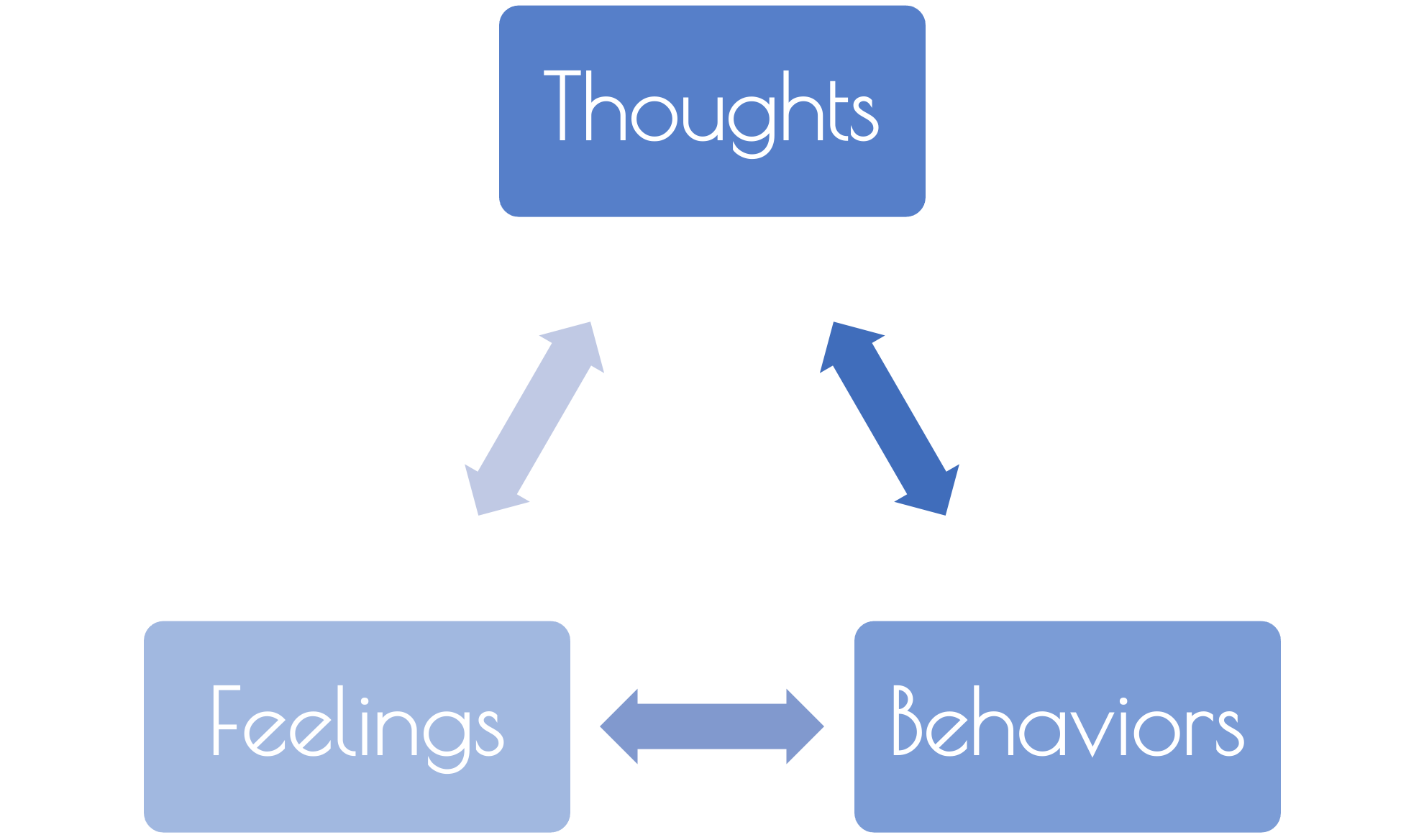
CBT helps you challenge those thoughts and reframe them into something more balanced and realistic. This shift not only improves how you feel but also leads to actions that support your well-being, like reaching out for support or tackling tasks head-on.
CBT isn’t just about what happens in your therapy sessions, it’s a collaborative process. At Evolve Counseling Services, you and your therapist work together to uncover what’s driving the negative patterns, set goals, and develop practical strategies to move forward. Often, you’ll have homework, like documenting your thoughts or trying out new behaviors, so you can practice what you’re learning in real-life situations. but don’t worry; Ben and Lindsey won’t grade you.
A big part of CBT is learning how your thoughts, emotions, and behaviors are connected. This awareness helps you build emotional resilience and manage overwhelming feelings in healthier ways. Over time, the tools you gain from CBT can make a huge difference, helping you handle challenges with more confidence and balance.
What Cognitive Behavioral Therapy Can Help With
CBT is a versatile and proven approach for help treat a wide range of mental health conditions.
Anxiety disorders
If you’re dealing with constant worries, fears, panic attacks, or social anxiety, CBT is a game-changer. It helps you pinpoint those anxious thoughts that keep running through your head and teaches you how to calm them down. It also helps correct behaviors that may inadvertently be making anxiety worse. Over time, you’ll feel more confident and less overwhelmed by your anxiety.
Depression
For anyone feeling stuck in a cycle of negativity and low energy, otherwise known as depression, CBT helps you break out of it. You’ll work on shifting unhelpful thoughts and finding small actions to lift your mood. The aim is to rebuild your motivation and see the positives again, one step at a time.
PTSD and trauma recovery
If past trauma is holding you back, CBT can help you process those overwhelming experiences. It gives you tools to manage triggers and regain a sense of control in your life. You don’t have to let those memories define you, CBT helps you move forward.
OCD
When intrusive thoughts and repetitive behaviors take over, CBT helps you take back control. You’ll learn how to challenge obsessive thoughts and cut back on compulsive habits, so they’re not running the show anymore.
Eating disorders
Struggling with food and body image? CBT helps you tackle those harmful patterns and build a healthier relationship with eating. The focus is about finding balance and creating a mindset that supports your overall well-being.
Substance abuse
If you’re dealing with substance abuse, CBT gives you healthier ways to cope. You’ll learn to spot your triggers, handle cravings, and build strategies to stay on track. It’s all about creating lasting changes that stick.
It’s also great for stress management, improving relationships, and boosting self-confidence, making it a go-to treatment option for us here at Evolve Counseling Services in Fort Collins.
Different Types of CBT and Complimentary Styles of Therapy
Therapy isn’t one-size-fits-all, and CBT comes in a variety of flavors to fit different needs. Here’s a rundown of several types of CBT and other complimentary styles of therapy.
Cognitive Therapy (CT)
Cognitive Therapy is the core of CBT. The goal is to spot those negative thoughts that creep in and throw you off track. You’ll learn to challenge them by asking questions like, “Is this really true?” or “Am I being unfair to myself?” Once you see them for what they are, you can replace them with thoughts that are more realistic and supportive. It’s more versatile and works for everything from anxiety and depression to just managing everyday stress.
Dialectical Behavior Therapy (DBT)
DBT is a perfect fit for you if you’re feeling like your emotions are running the show. It combines mindfulness (staying present in the moment) with practical tools to help you manage big feelings, handle conflict, and deal with stress. Originally designed for borderline personality disorder, it’s now used for all kinds of emotional challenges, especially if relationships or intense emotions are part of the mix.
Rational Emotive Behavior Therapy (REBT)
We all have or have had, at times, those irrational beliefs that make life harder, like “I have to be perfect” (aka perfectionism) or “I’ll never be good enough.” REBT helps you call out those thoughts and replace them with more reasonable, helpful ones. It’s an excellent option for reducing self-criticism, tackling anxiety, or managing anger.
Acceptance and Commitment Therapy (ACT)
ACT takes a fresh approach by teaching you to stop battling uncomfortable thoughts and feelings. Instead of fighting them, you learn to accept them and focus on what truly matters. Think of it as saying, “Yeah, this is tough, but I can still move forward.” It’s a great fit for dealing with chronic pain, stress, or anxiety.
Mindfulness-Based Cognitive Therapy (MBCT)
MBCT mixes mindfulness practices with CBT techniques to help you manage anxiety and stress. It’s all about staying present so you can recognize negative thought patterns before they take over. It’s especially helpful if you’ve dealt with recurring depression or feel overwhelmed by stress.
Interpersonal Therapy (IPT)
If relationships are a big part of what’s stressing you out, IPT could be an option for you. It focuses on how you interact with others and works on resolving conflicts or improving communication. It’s often used for issues like grief, relationship struggles, or major life transitions that impact your mental health.
Stress Inoculation Training (SIT)
SIT is like prepping for stress before it hits. It’s a training program that helps you build coping strategies to manage anxiety and stress in tough situations. Whether it’s work-related pressure, public speaking fears, or other challenges, SIT gives you the tools to stay calm and move forward when things get tough.
Each approach shares the same goal: helping you break free from the patterns that keep you stuck and build healthier, more productive habits. The beauty of CBT is its flexibility, it adapts to your unique needs so you can find the approach that best fits you.
Key Techniques in Cognitive Behavioral Therapy
CBT gives you practical tools to break out of negative cycles and build resilience.
Identifying negative thoughts is one of the first steps to breaking the cycle. It’s about recognizing those automatic thoughts that pop into your head and hold you back.
A core idea in Cognitive Behavioral Therapy (CBT) is called cognitive appraisal or cognitive restructuring. It highlights that events themselves don’t directly cause our emotions. Instead, it’s the meaning we assign to the event that shapes how we feel.
Here’s how it works in everyday terms:
Event
Something happens that is relatively neutral on its own (for example, a friend doesn’t text back).
Interpretation
Your mind automatically explains what that event means (for example, “They’re upset with me” or “I don’t matter”).
Feeling
That interpretation then drives the emotional response (sadness, anxiety, shame, frustration).
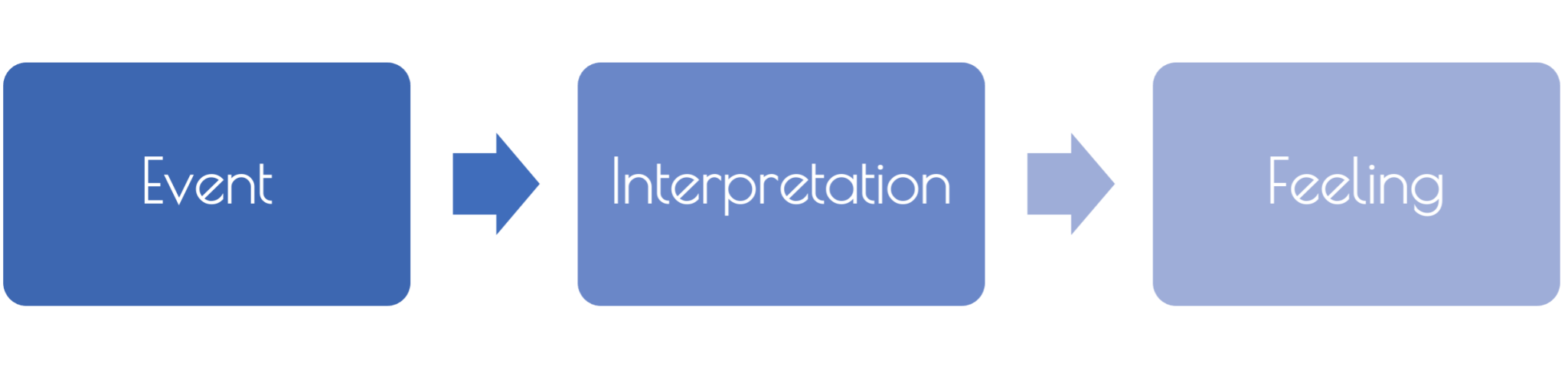
Cognitive restructuring focuses on the middle step—the interpretation. In therapy, clients learn to:
- Notice automatic, unhelpful interpretations
- Question whether those interpretations are accurate or complete
- Practice more balanced or realistic ways of viewing events
When interpretations shift, emotions often soften, even if the event itself doesn’t change.
CBT teaches you how to question whether these interpretations are really accurate and helps you replace them with more realistic thoughts.
Practicing new skills goes beyond just changing how you think. There is also a focus on changing behavior. You’ll learn hands-on techniques like managing stress, communicating assertively, and problem-solving. These are skills you can use in your daily life to handle those sudden challenges better.
Setting goals is another core part of CBT. Whether you want to improve your relationships, reduce stress, or feel more confident, setting clear, actionable goals gives you something to work toward. It helps focus your efforts and track your progress.
Effective problem-solving breaks down big issues into smaller, more manageable steps. Instead of feeling overwhelmed, you’ll learn how to approach challenges one piece at a time, making them much easier to tackle.
Self-monitoring is like taking a closer look at how your thoughts, feelings, and behaviors are connected. By tracking them, you’ll start to notice patterns you might not have realized were there, giving you a better understanding of what’s driving your actions and how to navigate them.
By mastering these techniques, you’ll feel more equipped to handle life’s ups and downs with confidence and control. CBT isn’t just about talking, it’s about your actions and giving you the tools to make real, lasting changes.
The Effectiveness of CBT
CBT is the most well-researched method of psychotherapy in existence. Based on a large body of research, CBT has established itself in the following ways (Hoffman, Asnaani, Vonk, Sawyer & Fang, 2012):
- No other form of psychotherapy has been shown to be more successful than CBT.
- The concepts in CBT are consistent with modern understanding of the human brain and behavior.
Additional studies that focus on anxiety have concluded “CBT is efficacious for adult anxiety disorders.” (Hoffman & Smits, 2008).
Does any of this sound like you?
These are real things people say when they first reach out to us. If you’re reading this because you’re wondering whether CBT could actually help — that’s a good sign. It means you’re already doing the hard part: looking for something that works.
At Evolve Counseling in Fort Collins, CBT isn’t something we dabble in — it’s what we do, every day, with every client. Lindsey and Ben each have 20+ years of experience using CBT to help people get unstuck.
The Focus: Present vs. Past
One of the key differences between CBT and other therapies is its focus on the here and now. CBT addresses the patterns in your current thoughts and behaviors that might be holding you back. While it acknowledges that past experiences have shaped how you think and act today, it doesn’t dwell there for long. Instead, CBT aims to help you make meaningful changes in your present life, giving you the tools to move on.
Psychodynamic therapy takes a different approach. It delves into your past, your childhood, relationships, and experiences to uncover how they contribute to your current challenges. The idea is that by understanding those root causes, you can gain insight and clarity, which may help you move forward. However, this approach lacks specific action steps or recommendations. There is benefit in understanding the origin of the problem, but it does not inherently instruct how to solve the problem.
Comparing CBT with Other Therapies
CBT stands out for its structured approach, making it a popular choice for people who want clear, actionable strategies to address their challenges. The structure often includes homework, like challenging unhelpful thoughts or practicing new behaviors between sessions, which helps reinforce what you’ve worked on during therapy. This focus on active participation makes CBT feel more like a team effort between you and your therapist, where the goal is to give you practical tools to handle life’s challenges.
In comparison, other therapies can be more open-ended. It’s less about following a set structure and more about creating a space to explore your thoughts and feelings as they come up. There’s no rush to solve a specific problem; instead, the goal is often self-discovery and understanding how past experiences and relationships influence your current life.
Why CBT is a Favorite
CBT stands out because it’s practical and focused on results. It’s not just about talking through your problems, it’s about taking real, actionable steps to start feeling better.
CBT is empowering because it doesn’t just fix current problems. It gives you tools and strategies you can use long after therapy ends. Whether it’s managing stress, challenging negative thoughts, or handling tough situations, you’ll walk away feeling more in control of your mental health.
It’s also short-term, which is a big plus for a lot of people. While some therapies can go on for years, CBT often delivers meaningful results in just 12 to 20 sessions. In a matter of months, you can see real progress and start feeling better, faster.
Another great thing about CBT is how much self-awareness it builds. It helps you understand your thought patterns, behaviors, and emotional triggers. Once you see how these all connect, it’s much easier to make positive changes and avoid falling into old habits.
CBT is evidence-based, meaning it’s not just guesswork. Decades of research show it works for issues like anxiety, depression, and PTSD. Knowing you’re using a proven method to treat depression can give you confidence that the process will actually help.
And the best part? CBT is all about teamwork. You’re an active part of the process, whether it’s through examining thoughts, practicing new behaviors, or problem-solving a challenging issue. This hands-on approach makes progress feel more achievable and keeps you motivated to stick with it.
Things to Know About CBT
CBT is super effective, but there are a few things to keep in mind before diving in.
First, change takes effort. Unlearning old habits and building new ones isn’t always easy, it takes time, patience, and a willingness to stick with it.
CBT is pretty structured. If you like having clear steps and goals to follow, you’ll probably love this approach. But if you’re more into free-flowing conversations, it might take some time to adjust.
Being open to change is key. Progress comes when you’re willing to try new ways of thinking and doing things, even if they feel a little uncomfortable at first.
Finally, it’s a gradual process. Big wins don’t usually happen overnight. Instead, it’s about making small, consistent steps that add up to meaningful change over time.
If you’re ready to put in the effort, CBT can be a game-changer for your mental health.
How Long Does Therapy Take?
CBT is often referred to as short-term therapy, but that doesn’t mean it’s a one-size-fits-all timeline. Many people start with a focus on one specific issue, like managing anxiety or improving sleep, and complete therapy within 12 to 20 sessions. However, the duration can vary based on your goals and the complexity of what you’re working through. For example, clients can discover other areas of their life that need attention as they better understand their thoughts and behavior.
Also, some clients will elect to attend therapy for maintenance after they have addressed their primary goals. This typically involves attending “tune up” sessions that are less frequent and preserve or advance the progress previously made.
Why Do These Things Matter?
Choosing the right type of therapy depends on your needs, personality, and goals. If you’re looking for something that’s focused, practical, and goal-oriented, CBT might be a great fit. If you feel like unresolved issues from your past are holding you back, psychodynamic therapy could provide the insight you need. And if you want something structured but with room for mindfulness and emotional exploration, DBT might offer the perfect balance.
Whatever you choose, the important thing is finding a therapeutic approach and the right therapist that resonates with you and feels like the right path to personal growth and healing.
How to Get Started with CBT
Starting CBT is easier than you might think.
At Evolve Counseling Services, Lindsey Phillips, LPC, and Ben Smith, LPC, specialize in CBT and are pros at understanding how to use CBT to best help you. Whether you’re a working parent with depression, a college student with anxiety over the school year and your future, or single and struggling to get your bearings, Evolve’s counselors can help you.
Evolve also offers teletherapy to anyone living in Colorado if you’re busy like most of us or just struggling to fit in the office visit. Instead of rushing to get to your appointment, just pick up the phone or grab your computer and have your session from the comfort of your own home or office.
Reach out to Evolve Counseling Services to get started on your journey. Their approachable, down-to-earth therapists are here to help you feel understood, supported, and ready to tackle whatever comes your way.
Don’t wait. A brighter, more balanced life is within reach.